
A busy checkout does not automatically mean a successful business. For online stores, Black Friday performance depends on what remains after product costs, fulfilment, advertising and returns. A simple margin calculation and a focused offer can make 27 November 2026 more useful than another blanket discount.
Define the outcome before choosing the discount
Are you clearing old stock, acquiring new customers or helping existing customers buy a useful accessory? Each objective needs a different offer. Slow-moving inventory can justify a different calculation from a bestseller that would sell at its normal price.
Set three limits before launch: your minimum contribution per order, your maximum advertising spend and the number of orders your team can fulfil reliably. An illustrative objective might be 80 additional orders contributing at least €12 each after variable costs. That is a planning assumption, not a sales forecast.
Why a 20 per cent discount can cost much more in margin
Suppose an item normally sells for €100 excluding VAT. Product costs, payment fees, packaging, subsidised shipping and an allowance for returns total €60 per order. You retain €40 towards fixed costs and profit before additional advertising.
Reduce the net selling price to €80 and, if variable costs stay unchanged, the contribution falls to €20. The selling price drops by 20 per cent, but the contribution halves. You need twice as many orders to generate the original total contribution before accounting for extra advertising.
| Illustrative amount per order | Normal price | Promotion |
|---|---|---|
| Net revenue | €100 | €80 |
| Variable costs before advertising | €60 | €60 |
| Contribution before advertising | €40 | €20 |
| Additional advertising per order | €0 | €8 |
| Remaining contribution | €40 | €12 |
This example deliberately simplifies the calculation. Fees, shipping and returns can change with order value and product mix. Use your own figures excluding VAT where appropriate, and assess the total campaign contribution as well as individual orders.
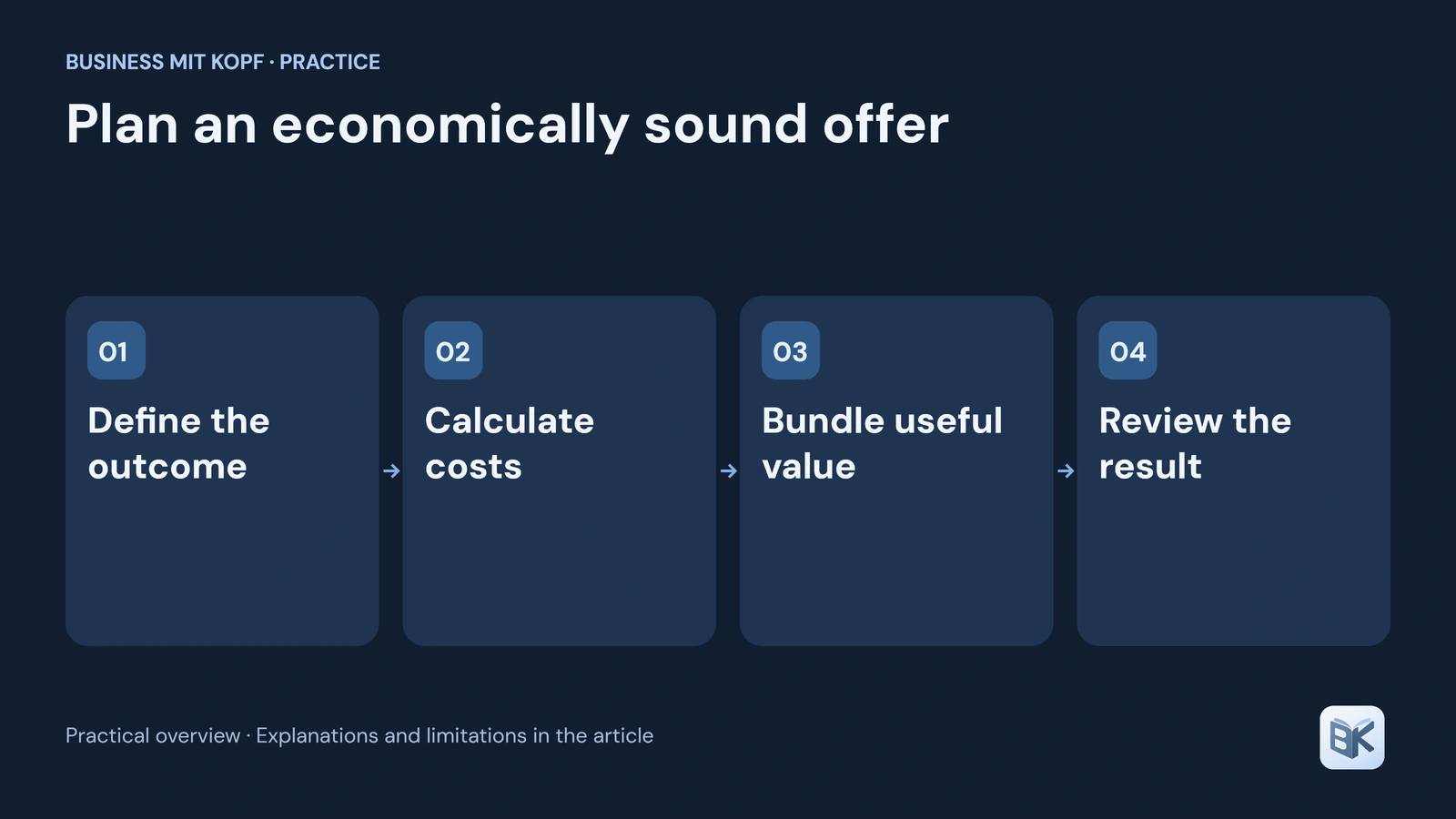
Five alternatives to a storewide discount
Build a genuinely useful bundle
Combine products that solve a problem together, such as a starter kit and the right accessories. Explain exactly what customers receive and why the combination helps. A bundle is only valuable if its components are useful. Calculate the margin of the complete set and avoid inflated reference prices.
Choose a relevant gift with a manageable cost
A practical accessory or guide can offer meaningful value while costing less than a large discount. Include its production, support and shipping costs. An unwanted leftover product does not become compelling simply because it is labelled free.
Test an economically sensible shipping threshold
Free shipping above a minimum spend may encourage additional purchases. Base the threshold on your usual basket and the contribution from the extra items. Customers should not have to buy something unsuitable to benefit. Explain delivery charges and conditions early in the journey.
Make advice and service visible
For products that require explanation, a selection guide, setup instructions or a short consultation can reduce uncertainty more effectively than another price cut. Reserve real capacity for any service promised. An offer that overwhelms support creates disappointment after purchase.
Help existing customers find relevant additions
Recommend accessories that fit earlier purchases instead of sending everyone the same coupon. Check the rules governing marketing emails. A previous purchase is not universal permission to send newsletters; German requirements are discussed below and other jurisdictions differ.
Use honest scarcity and clear prices
A countdown should end when the promotion actually ends. A claim that only two units remain must reflect real stock. Artificial urgency damages trust and may breach consumer protection rules.
German legal context: Section 11 of Germany’s Price Indication Ordinance, the PAngV, is particularly relevant when announcing price reductions for goods to consumers. The reference is generally the lowest total price charged during the preceding 30 days. Exceptions and presentation details need individual review. This is not a statement that the same rule applies identically worldwide.
For German marketing emails, section 7 UWG is relevant. Consent is normally required, while the existing-customer exception has specific cumulative conditions. Do not turn every past customer into a newsletter recipient automatically.
Evaluate what remains after the weekend
Review orders, net revenue, contribution after advertising, new-customer share, cancellations and later returns. Consider how much demand might have occurred anyway. Comparing the weekend only with the immediately preceding days cannot establish an incremental effect: seasonality and other campaigns also matter.
Check repeat purchases a few weeks later. Strong Friday revenue can still produce poor economics if returns and support costs follow. Record the assumptions that proved wrong so your next promotion improves rather than repeating the same discount.
A practical launch checklist
- Set a specific objective and a minimum acceptable contribution.
- Calculate three realistic baskets, including a returns allowance.
- Check stock, delivery promises, pricing and the mobile checkout.
- Cap advertising spend and define when to stop the campaign.
- Reassess performance once cancellations and returns are known.
My recommendation: Begin with a clear offer for a defined audience. A successful Black Friday communicates useful value and makes an economic contribution. It does not need the deepest discount.
Sources and image credits
Image credits
Cover motif: AI-generated conceptual image using OpenAI / ChatGPT. Typography and supplementary infographic: Business mit Kopf. Not a documentary photograph.
0 comments
No comments have been published yet.