

Affiliate links use a partner identifier to associate visitors and qualifying sales or leads with a publisher's account. Deep links can become long, and some publishers prefer an address that is shorter or easier to manage.
The German original explains masking, sometimes called link cloaking, and the difference between a visible redirect address and its eventual destination. Its disclosure discussion is written from a German publishing perspective; programme terms and local requirements must also be checked elsewhere.
What is link masking?
A masked link points first to a redirect address. When the visitor follows it, the server sends the browser to the underlying destination. The original describes a permanent 301 redirect as a common implementation.
Here are the two examples from the original article:
Unmasked link  Advertising · Affiliate link *
Masked link Advertising · Affiliate link *
The examples contain advertising for the CHECK24 partner programme. A qualifying referral may earn a commission. The internal address /check24-partnerprogramm redirects to the external partner address.
Why use a redirect?
A short, recognisable address can be easier to present than a long URL with many parameters. It can also provide one central place to manage a destination used in several articles.
If that destination changes, updating one redirect can be easier than finding and editing every reference. Grouping links in a clear inventory helps with this maintenance.
The original also discusses measuring how often a link is followed. Any measurement needs to respect the applicable privacy requirements. On this magazine, the current tracking behaviour is described in the privacy information rather than implied by the historical article.
Transparency and programme terms
Masking also hides the immediate external destination from the visitor. A recognisable address is therefore not a substitute for explaining that a link is advertising or that following it will leave the site.
Whether a partner programme permits a particular redirect depends on its terms. Do not assume that acceptance by one programme establishes permission for another.
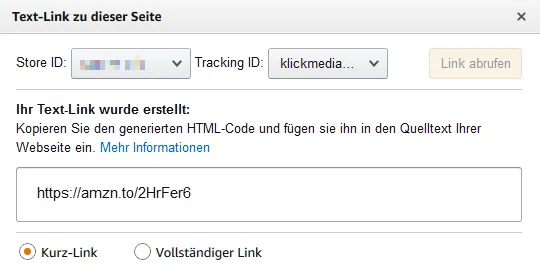
The original pays particular attention to Amazon's programme restrictions and its own amzn.to shortening option. Review the programme's current terms before masking an Amazon link instead of relying on an old general statement.
Tools discussed in the original
The article describes an external shortener such as Bitly, where a short domain and identifier lead to the destination. It notes possible drawbacks: visitors may trust an unfamiliar short address less, and managing the links may be less convenient than keeping them under the publisher's own domain.
For WordPress sites, the author discusses Easy Affiliate Links and Pretty Links. The original reports personal difficulties with some redirects in the first plugin and a preference for the second at that time. Features, editions and prices may have changed.
These are WordPress-specific options. The general principle of centrally managed redirects can also be implemented in other hosting systems.
Search-engine information
The original recommends nofollow for advertising links. The current magazine also identifies qualifying links with sponsored relationship information. Those technical attributes do not replace a visible explanation for readers.
Conclusion
A redirect can simplify link management and make a long address easier to present. It should not conceal the commercial relationship from the audience or bypass the relevant programme's terms.
Keep the destination, advertising disclosure and privacy implications clear. International readers should review their own requirements rather than treat the German original as a universal statement that every form of masking is permitted.
References from the German original
Sources and image credits
Image credits
Markus Spiske & Joshua Forbes / Unsplash
0 comments
No comments have been published yet.